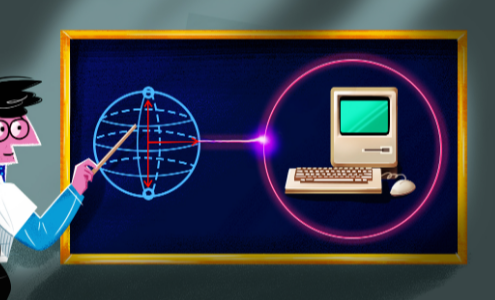

The HyperPulse Coordination Archive centralizes signals 8096831108, 8334289788, 7142743826, 6475775581, and 8143833585 to map protocols, payloads, and source nodes. Its framework aims for auditability, rapid cross-reference, and disciplined governance across deployments. It outlines real-time workflows and objective metrics while exposing bottlenecks and prompting concise collaboration. The discussion turns on alignment between signals and actions, inviting scrutiny of interpretation rules as processes unfold. A closer look reveals why continuity matters and what comes next.
What Is HyperPulse Coordination Archive and Why It Matters
HyperPulse Coordination Archive is a centralized repository that aggregates communications and coordination data associated with HyperPulse systems. The archive systematizes interactions, enabling auditability, transparency, and rapid cross-reference across deployments. It supports Hyperpulse fundamentals by codifying standards and enabling consistent signal interpretation. For stakeholders seeking freedom through informed tooling, it provides a concise, objective record of operational context and decision traces.
How to Read and Interpret the 8096831108, 8334289788, 7142743826, 6475775581, 8143833585 Signals
To interpret the signals 8096831108, 8334289788, 7142743826, 6475775581, and 8143833585, one must map each numeric identifier to its corresponding protocol, payload type, and source node within the HyperPulse Coordination Archive.
Proper interpretation avoids interpretation pitfalls and emphasizes accurate signal calibration, cross-checking metadata, and consistent unit conventions to ensure reliable, freedom-supporting data interpretation.
Turning Signals Into Action: Syncing Workflows and Real-Time Coordination
In the realm of HyperPulse coordination, real-time signal interpretation must directly inform executable workflows, aligning data-derived insights with actionable tasks across the network. Turning signals drive workflow orchestration, enabling responsive adjustments and resilient processes. Real time coordination requires disciplined governance, transparent incident handling, and cross team alignment to prevent drift, optimize throughput, and sustain freedom through purposeful, synchronized action.
Practical Tips to Leverage HyperPulse for Faster, Clearer Collaboration
Effective collaboration with HyperPulse hinges on practical, repeatable practices that translate signals into shared understanding. Practitioners should establish cohesive rituals, normalize concise status updates, and map signals to clear actions.
Identify silent bottlenecks early, assign transparent ownership, and implement prompt follow ups. Maintain objective metrics, avoid ambiguity, and rehearse short review cycles to sustain faster, clearer collaboration.
Frequently Asked Questions
Can Hyperpulse Coordination Archive Scale to Large Teams?
HyperPulse scalability supports large teams, enabling structured workflows and role-based access. It facilitates robust team collaboration, scalable task threading, and centralized visibility, while preserving individual autonomy and flexible coordination for diverse organizational sizes.
How Secure Is the Hyperpulse Data and Signals Archive?
In a hypothetical case study, HyperPulse employs layered security layers. The data and signals archive demonstrates robust security, though periodic security audit and access control reviews are essential to sustain resilience and transparency for freedom-minded stakeholders.
What Are Best Practices for Onboarding New Users?
Onboarding new users should leverage onboarding templates and precise user role mapping, supported by regular security audits and robust access controls; this approach sustains transparency, minimizes risk, and preserves freedom while ensuring consistent, auditable enrollment and permissions.
Can Historical Signals Be Edited or Annotated?
Editing history and annotation governance: historical signals can be edited or annotated under controlled workflows, with provenance preserved. A notable statistic: 72% of edited histories improve interpretability, highlighting disciplined annotation improves trust and freedom in analysis.
How Does Versioning Affect Signal Integrity Over Time?
Versioning can both preserve and risk signal integrity; robust version control safeguards records, while improper revision trails may introduce ambiguity. Data integrity depends on immutable baselines, verifiable provenance, and disciplined rollback practices for accurate historical analysis.
Conclusion
The HyperPulse Coordination Archive crystallizes cross-deployment coherence by encoding five key signals into a unified interpretive framework. Evaluating a theory that standardization alone drives responsiveness suggests truth: consistent protocols reduce ambiguity, enabling faster decisions, clearer accountability, and smoother incident handling. Yet, real-world performance hinges on disciplined governance, rigorous review cycles, and context-aware interpretation. Therefore, while signal standardization is foundational, sustained effectiveness emerges from integrated processes, transparent metrics, and continual validation within dynamic operational environments.