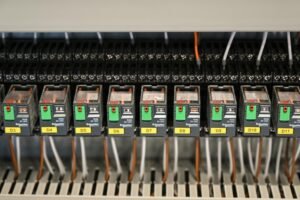

The HelixVertex Synchronization Hub coordinates timing across distributed nodes with a centralized reference clock and deterministic messaging. It compensates local skews through feedback to preserve event order and state consistency. Real deployments favor modular clusters, scalable topologies, and automated health checks. Metrics focus on end-to-end latency, resilience, and scalability to maintain visibility across components. Questions remain about integration challenges, fault handling, and how performance scales under variable load, inviting a closer look at practical limits and optimization strategies.
What Is Helixvertex Synchronization Hub and Why It Matters
The HelixVertex Synchronization Hub is a centralized framework designed to coordinate timing and state across distributed computational components. It enables consistent event sequencing, state reconciliation, and fault tolerance.
How the Hub Coordinates Timing Across Distributed Nodes
How does the HelixVertex Synchronization Hub align timing across distributed nodes to ensure coherent operation? It performs centralized timing orchestration, distributing a reference clock and compensating local skews via feedback. Nodes apply precise offsets, achieving clock synchronization through deterministic message exchange, timestamping, and delay compensation. The result is harmonized progress, minimized jitter, and predictable inter-node coordination suitable for freedom-driven architectures.
Real-World Deployment Patterns and Best Practices
Real-world deployment patterns for the HelixVertex Synchronization Hub emphasize scalable topology, deterministic configurations, and robust fault handling. Implementations favor modular clusters, clear failover pathways, and automated health checks. Practices align with synchronization protocols and distributed clocks, ensuring predictable drift margins and recoverability. Data-driven governance reduces variance, while standardized deployment scripts accelerate safe rollouts. Operators gain freedom through transparent metrics and repeatable, auditable procedures.
Measuring Success: Latency, Resilience, and Scalability Metrics
What metrics best capture the performance of the HelixVertex Synchronization Hub, and how do latency, resilience, and scalability interrelate in practice?
The analysis emphasizes latency tuning as a primary lever, with resilience modeling framing fault tolerance and recovery timelines.
Data-driven benchmarks quantify throughput and latency variance, while scalable architectures anticipate growth; outcomes hinge on end-to-end visibility and disciplined optimization, not isolated improvements.
Frequently Asked Questions
What Are Common Failure Modes in Helixvertex Synchronization Hub Clusters?
Common failure modes in HelixVertex synchronization hub clusters include transient latency spikes and desynchronization due to network jitter, configuration drift, and clock drift; mitigating factors emphasize latency variance tracking and hardware redundancy to sustain reliability.
How Is Security Managed for Node-To-Node Time Synchronization?
Security governance enforces precise authentication and tamper detection for node-to-node time sync. A 99.99% uptime target motivates network hardening, fault handling, and operations resilience, with continuous audits and robust encryption guiding fault-tolerant, auditable time distribution.
Can the Hub Operate in Air-Gapped Environments?
The hub can operate in air-gapped environments, subject to strict offline key management and controlled data transfer. air gapped feasibility depends on secure bootstrapping, synchronized clocks, and verifiable offline updates, aligning with freedom-loving, data-driven resilience and auditable operations.
What Are Upgrade/Rollback Procedures for Hub Firmware?
Upgrade procedures for the hub firmware require staged validation, authenticated transfers, and integrity checks; rollback procedures specify a verified restore point, reversion testing, and rollback safeguards to ensure continuity during version changes without data loss.
How Does the Hub Handle Clock Drift Beyond Specs?
The hub mitigates clock drift by calibrating against a stable reference, detecting time skew beyond tolerance, and applying corrective offsets. It logs deviations, flags anomalies, and maintains synchronization margins to preserve coordinated operations across nodes.
Conclusion
The HelixVertex Synchronization Hub delivers precise, centralized timing across distributed components, enabling consistent event sequencing and robust fault tolerance. Through deterministic messaging and skew compensation, it aligns local clocks, reduces coordination errors, and enhances state reconciliation. Real-world patterns emphasize modular, scalable topologies with automated health checks. While some may doubt its complexity, the approach yields measurable gains in latency and resilience, supported by clear metrics. Overall, it enables disciplined, data-driven orchestration of large-scale systems.