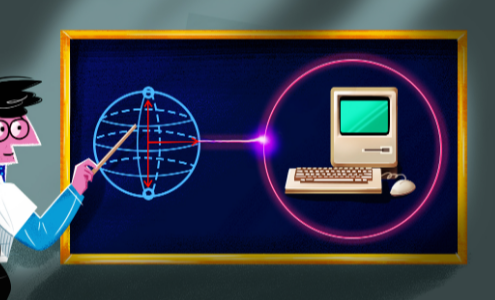

EchoWave Data Coordination Hub positions the five identifiers within a unified, ETL-centric workflow. It emphasizes deterministic, scalable data ingestion, processing, and orchestration across real-time streams and legacy databases. Governance, security, and lineage are codified to maintain auditable control as workflows expand. The framework promises consistent metadata management and repeatable pipelines, enabling cross-team alignment. A clear path emerges for extending the pipeline while preserving reliability, inviting stakeholders to explore how these elements unfold in practice.
What EchoWave Brings to Data Coordination
EchoWave delivers a deterministic, scalable data coordination framework that unifies ingestion, processing, and orchestration across heterogeneous sources. It emphasizes data governance, ensuring consistent policy enforcement and auditable operations. Data lineage is tracked end-to-end, enabling traceability and impact analysis. Security controls are integrated, reducing risk. Comprehensive data catalogs accelerate discovery, metadata management, and collaborative, freedom-oriented ETL workflows.
How 7059952829, 5164226400, 2342311874, 7577121475, 7402364407 Fit Into a Unified Workflow
The sequence 7059952829, 5164226400, 2342311874, 7577121475, and 7402364407 can be integrated into a unified workflow by mapping each identifier to a distinct data source or stream, standardizing ingestion interfaces, and applying deterministic processing pipelines. This promotes coherence mapping and cross team alignment while enabling scalable, ETL-driven data coordination with precise, repeatable outcomes.
From Real-Time Streams to Legacy Databases: Orchestrating the Signal Pulse
As real-time streams feed continuously into the data fabric, the orchestration layer must bridge these dynamic inputs with legacy databases to ensure consistent visibility and reliability.
The ETL pipeline enforces deterministic throughput, metadata tracking, and scalable transforms.
Latency analysis informs buffering strategies, while data lineage provisions traceability across systems, preserving freedom to evolve without compromising accuracy or auditability.
Governance, Security, and Scalability That Keep Your Team in Control
How can governance, security, and scalability align to keep teams in control as data flows scale, secure, and comply?
The framework enforces data governance through repeatable ETL patterns, monitors lineage, and codifies access controls, ensuring a disciplined yet flexible workflow.
Security posture is measurable, scalable, and automated, while deterministic pipelines preserve consistency, enabling freedom-aware teams to operate with confidence and auditable resilience.
Frequently Asked Questions
How Is Data Provenance Tracked Across Echowave?
Data provenance is tracked through deterministic pipelines that enforce data lineage and comprehensive audit trails, enabling scalable ETL processes with verifiable traces while preserving freedom to explore, reproduce, and validate transformations across EchoWave’s distributed data fabric.
Can Users Customize Alert Thresholds for Streams?
Users can customize alert thresholds for streams; example: a financial feed triggers nuanced, API-accessed alerts. Threshold management integrates with external integration, disaster recovery, pricing tiers, data provenance, and ETL workflows for scalable, deterministic operations.
What Are the Pricing Tiers for 7059952829 and Others?
Pricing tiers for these streams are defined by data governance policies, offering scalable, deterministic plans; pricing tiers align with usage levels, ensuring ETL-focused flexibility while preserving freedom to optimize flow and resource allocation across environments.
How Does Disaster Recovery Work Within the Hub?
Disaster recovery within the hub employs data replication across regions, enabling rapid failover. Governance policies ensure auditability, while archival strategies preserve historical states. The system remains scalable, deterministic, and ETL-focused, supporting freedom-oriented architectures without sacrificing reliability or compliance.
Is There an API for External System Integration?
Breaks ground on demand; there is an API for external system integration. The solution supports API integration and Custom alerts, ETL-focused, scalable, deterministic, and positioned for freedom-seeking architectures.
Conclusion
EchoWave stands as a mechanized river, where data.flows from five beacons into a single, disciplined delta. Each source contributes precise droplets that are filtered, transformed, and routed by deterministic ETL engines, building a scalable current of governance and lineage. Real-time streams fuse with legacy reservoirs, while access controls corral the surge. The result is auditable, repeatable, and orchestrated—an etl-focused ecosystem where every stream meets its map, every process proves its pattern, and resilience stays steady.